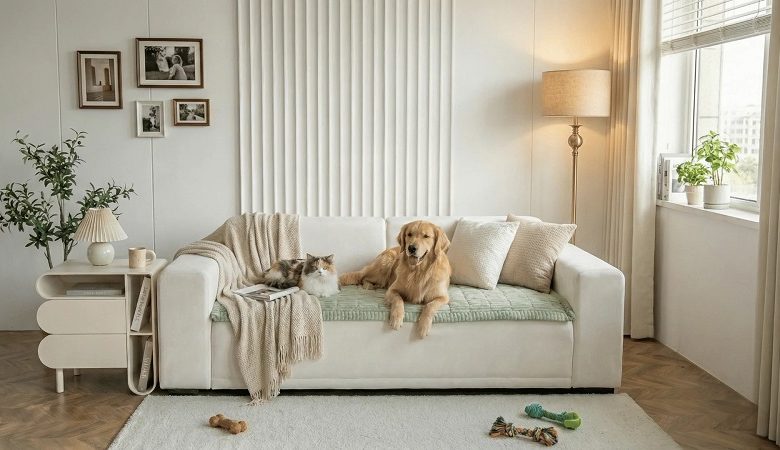
Velvet carries a reputation for high-maintenance elegance, the kind of luxury that seems destined for heartbreak the moment a dog or cat enters the living room. Most pet owners assume their only choices are banishing animals from the furniture entirely or draping a gorgeous sofa in crinkly plastic, quilted slipcovers, or ill-fitting sheets that instantly flatten the room’s aesthetic.
Surrendering your decor to bulky, unattractive covers is entirely unnecessary. In fact, velvet has a secret advantage over nearly every other upholstery fabric on the market: it lacks an exposed woven weave. Because velvet consists of thousands of short, densely packed upright fibers rather than interlocking threads, cats cannot easily sink their claws in to snag loops the way they do with linen, chenille, or tweed. The real everyday challenges come down to clinging fur, body oils, wet paws, and lingering odors. With a combination of invisible fabric barriers, thoughtful styling, and the right grooming and cleaning habits, you can keep your velvet furniture pristine while letting your pets lounge in comfort.
Establish an Invisible Shield with High-Performance Sealers
Before letting a pet settle onto a velvet piece, you should establish a protective baseline. Modern upholstery sealers create a microscopic barrier around each individual fiber, preventing liquids, mud, and natural skin oils from penetrating into the core material.
When selecting a fabric protector, avoid harsh solvent-based formulas that can stiffen delicate fibers or leave lingering chemical odors. Look for high-grade, fluoropolymer-free sealers or water-based nano-coatings designed specifically for upholstery. Synthetic velvet, such as high-performance polyester or performance velvet, handles sealers exceptionally well and already possesses substantial natural stain resistance. Blends containing cotton or silk require greater delicacy, so always perform a spot test on an inconspicuous patch, such as the inside seam of a cushion or along the underside edge, to ensure the spray does not alter the sheen or color.
Apply the spray in light, sweeping coats rather than soaking the surface. Once dry, liquid from muddy paws, drool, or accidental spills forms tight beads on the surface of the pile instead of soaking into the foam backing. This gives you ample time to blot spills away with a dry microfiber cloth before any discoloration sets in. Reapply the treatment every six to twelve months, paying extra attention to the front edges of seat cushions and the tops of armrests where pets typically rest their chins.
Style Strategic Layers That Look Intentional
You do not need an all-over slipcover to shield vulnerable zones. The most sophisticated way to protect high-traffic pet spots is through intentional textile layering that complements your interior design.
Most pets are creatures of habit who gravitate toward the exact same corner of a couch or chair every afternoon. Instead of covering the entire piece, focus exclusively on that landing zone. Fold a generous throw blanket into a structured runner and drape it cleanly across the seat cushion, or tuck it securely over the backrest where your cat likes to perch.
To make the layer look curated rather than protective, choose materials that create rich textural contrast against the velvet. A chunky waffle-knit wool, a structured herringbone cotton, or a heavy stonewashed linen throw adds tactile depth to the room while catching shedding hair, dander, and oils. Choose a shade that either mirrors the velvet for a sophisticated tonal look or coordinates with your existing accent pillows. When guests arrive, or when the blanket accumulates fur, you simply lift it away, shake it out, and wash it.
Remove Pet Hair Without Damaging the Pile
Velvet attracts pet hair easily due to static charge, and deep jewel tones like emerald, sapphire, and rust highlight every stray strand. However, using the wrong cleaning tools can quickly ruin the delicate pile.
Standard adhesive lint rollers often leave behind faint sticky residues that actually attract airborne dust and pet hair faster over time. Metal-toothed pet hair scrapers, while effective on dense loop carpets, can snag or shave velvet threads, leaving permanent bare patches.
The safest and most efficient tool for velvet is a classic rubber squeegee or a dedicated rubber pet hair brush. Dragging rubber lightly across velvet generates gentle friction that lifts hair cleanly out of the dense pile without applying excessive pressure. A traditional two-way lint brush with red velour directional fabric is another excellent choice, as it gathers deep-seated fur smoothly without friction burn.
Always work in the direction of the velvet nap when sweeping up fur. Rubbing vigorously against the natural direction of the fibers can bend or bruise the pile, creating irregular light reflections that make the furniture look prematurely aged. Once you lift the fur, follow up with the brush attachment on your vacuum cleaner, running it on gentle suction to pull out fine dander trapped beneath the surface.
Manage Claws and Redirect Scratching Urges
While cats rarely find thread loops to pull on velvet, sharp claws can still scratch through the pile and leave pressure scars if an animal kneels, stretches, or kneads forcefully.
Keeping your pet’s nails trimmed is your primary defense against claw damage. For dogs, keeping nails ground smooth prevents accidental gouges when they jump up to greet you. For cats, trimming just the sharp hook of each front claw every two weeks prevents them from piercing the backing fabric during stretching routines.
Pair physical maintenance with strategic behavioral redirection. If your cat tends to stretch against the arm of your velvet sofa, do not simply reprimand them after the fact. Place a tall, heavy sisal scratching post directly beside that arm. Cats scratch upon waking to stretch their shoulders and deposit scent; providing an immediate, superior alternative allows them to satisfy the urge without touching your upholstery. Once your cat forms a consistent habit with the sisal post, you can gradually move it a few inches each day toward a more discreet corner of the room.
Handle Accidents and Refresh Flattened Fibers
Even well-trained pets have occasional accidents, and knowing how to respond prevents permanent damage to your furniture.
If a dog tracks in damp mud, resist the urge to wipe it right away. Attempting to clean wet mud will push fine dirt deep into the pile, grinding it into the base fabric. Let the mud dry completely into a crust, gently break it up with your fingertips, and vacuum the dust away using a crevice tool.
For liquid accidents, press a clean white paper towel or cotton cloth straight down onto the spot to draw out the moisture. Never scrub or twist the cloth, as aggressive friction will twist the velvet fibers and leave a permanent crushed spot known as pile bruising. If an odor or stain remains, apply an enzymatic upholstery cleaner with a damp cloth, blotting lightly from the outer edge toward the center to avoid creating rings of watermarks.
If constant pet lounging eventually leaves flattened, crushed areas where your pet sleeps, restore the texture with indirect steam. Hold a handheld clothes steamer at least six inches away from the fabric, allowing the steam to relax the crushed fibers without soaking the cushion underneath. While the velvet is still warm and faintly damp, gently brush the nap upward with a soft-bristled clothes brush to restore its original plush dimension.
Living well with pets does not mean giving up fine upholstery. By pairing proactive invisible sealers with layered accents, gentle hair removal, and regular nail care, you can enjoy the tactile luxury of velvet furniture every single day while keeping your home welcoming for the animals you love.