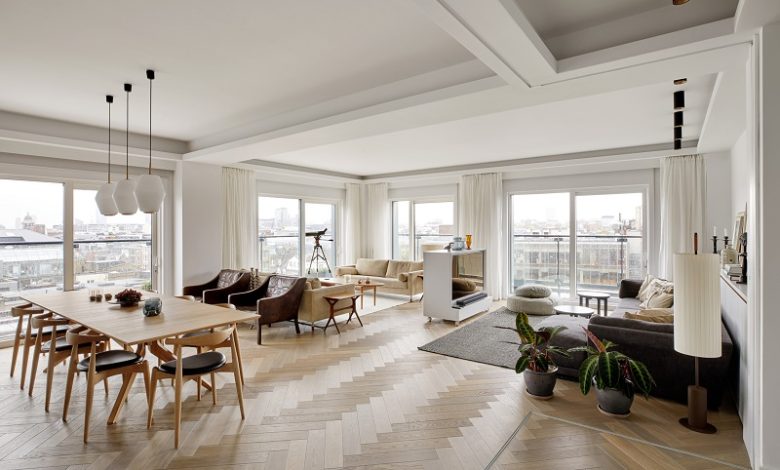
Standard eight-foot ceilings, low-clearance basements, and mid-century ranches often suffer from the same architectural limitation: they can feel compressed, dark, and visually heavy. While raising the roofline or exposing joists involves messy, cost-prohibitive structural remodeling, altering the perceived height of a room does not require structural demolition.
Perceived volume is largely an optical illusion governed by contrast, shadow, and sightlines. The human eye gauges spatial dimensions by looking for boundaries, specifically the sharp horizontal lines where walls end and ceilings begin. When those borders are abrupt or poorly lit, the eye instantly registers the ceiling plane, making the room feel lower than it actually is. By making deliberate choices with paint undertones, sheen distribution, and layered lighting, you can blur those boundaries and coax the eye into perceiving vertical expansion.
Rethinking the Standard Ceiling White Rule
For decades, the standard advice for any room was simple: paint the ceiling flat, stark white. While this approach works well in rooms with ten-foot clearances, it often backfires under low ceilings, especially when paired with medium or dark wall colors.
When you place a crisp, brilliant white ceiling directly against a saturated wall, you generate a sharp contrast line along the room’s entire upper perimeter. That high-contrast seam functions as a visual horizon. It catches the eye immediately, announces the precise vertical limit of the space, and draws attention straight to the lowest point of the architecture.
A far more effective approach is to soften that transition by tinting the ceiling paint. Ask your paint counter to mix a ceiling color using the wall color’s formula reduced to twenty to fifty percent of its original strength. This creates a tonal progression that feels organic. The ceiling reads as a lighter, airborne version of the walls rather than a hard visual cap. If your walls are already off-white or a light neutral, carry the exact same paint formula across both surfaces. When the wall color matches the ceiling, the junction at the corner disappears into shadow, tricking the brain into perceiving boundless height.
Erasing Boundaries with Color Drenching
If you prefer rich, moody hues over pale neutrals, color drenching is one of the most effective ways to eliminate the feeling of a low ceiling. This technique involves painting the walls, baseboards, door frames, crown molding, and ceiling in the identical paint color and finish family.
In a conventionally painted space, contrasting baseboards cut the wall off at the floor, and contrasting molding cuts it off at the top. The wall becomes a framed rectangular box. When you wrap the entire room in a single shade—such as deep olive, dusty slate, or warm camel—the eye finds no hard perimeter lines to anchor on.
Without contrasting borders to measure against, corners soften, shadows diffuse, and the physical transitions between vertical planes and horizontal planes fade. The room feels expansive and cohesive rather than compartmentalized, creating the sensation of walking into a continuous, atmospheric space rather than a room with a low lid.
Strategizing Sheen and Light Reflectance
Color selection matters, but the sheen of the paint dictates how natural and artificial light behave across the surface. Light reflectance value, or LRV, measures the percentage of light a color reflects, and managing that reflection is crucial when space is tight.
The Reliable Receding Flat Finish
In ninety percent of situations, an ultra-flat or dead-matte ceiling paint is the safest choice for vertical height. Matte surfaces absorb light rather than bouncing it erratically, which softens texture and hides drywall tape seams, plaster patches, and minor framing imperfections. Because a flat surface does not catch specular glare from windows or fixtures, it recedes visually, appearing further away from the viewer than it actually is.
The High-Gloss Lacquer Gamble
For adventurous spaces like powder rooms, formal dining rooms, or narrow entry halls, designers sometimes invert this logic by applying a mirror-like high-gloss paint or lacquer to the ceiling. A deep, high-gloss surface acts like a dark pool of water, reflecting the room, lamps, and windows below. This reflection creates a visual double of the space, effectively doubling its perceived height. However, this method requires flawless drywall preparation, as high gloss highlights every single ripple and nail pop in the plaster.
Painting Trim to Lengthen the Wall
Crown molding can inadvertently shorten a low ceiling if painted incorrectly. A thick white crown molding installed on an eight-foot wall takes four to six inches of visible vertical height away from the wall plane. To counteract this, either remove crown molding entirely or paint it the exact same color as the walls. When molding shares the wall color, it reads as a continuation of the wall rather than a ceiling border, effectively adding several inches of perceived height to the room.
Layering Light to Direct the Eye Upward
A coat of paint only performs as well as the light illuminating it. The single biggest lighting mistake in rooms with low ceilings is relying on a central, overhead flush-mount fixture—often referred to pejoratively as the ceiling dome or boob light. These fixtures cast a harsh pool of downward light onto the center of the floor while leaving the upper perimeter of the room in murky shadow, visually dropping the ceiling down like a blanket.
Prioritizing Uplighting Over Downlighting
To make a room feel taller, light must travel toward the ceiling, not just away from it. When you illuminate the ceiling plane, it turns into a massive, gentle secondary reflector that scatters soft ambient light back into the room.
-
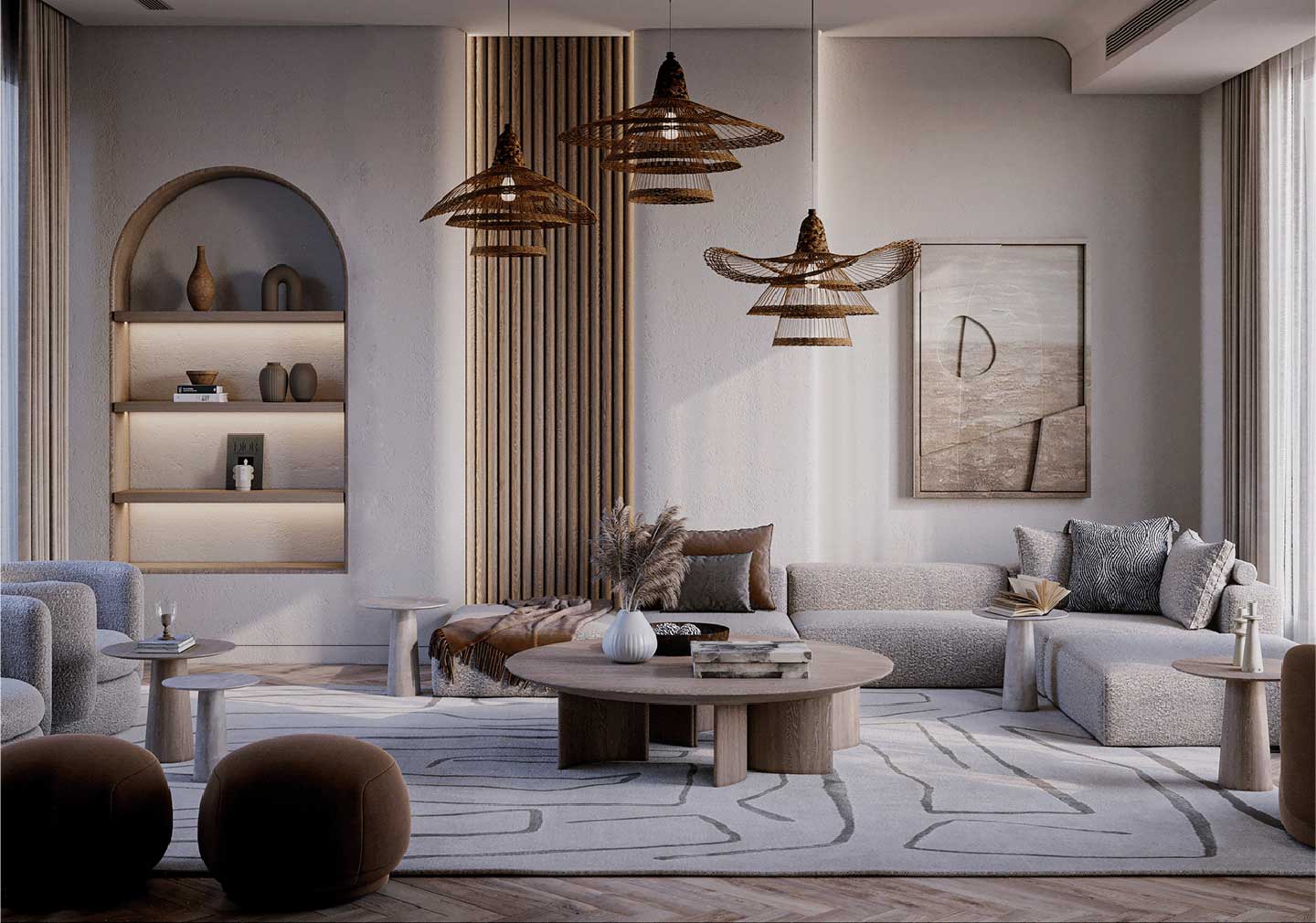
Upward-facing wall sconces: Mount sconces that direct light exclusively upward or have dual up-and-down beams. Position them at roughly eye level (sixty to sixty-six inches from the floor) to wash the top third of the wall and the ceiling edge with light.
-
Torchiere floor lamps: A tall, slender floor lamp with an open bowl top bounces lumens straight into the ceiling, creating an illuminated canopy that feels airy and open.
-
Architectural cove lighting: Tucking slim LED channels behind picture rails, behind furniture tops, or along floating crown moldings sends a soft halo of indirect light across the perimeter, giving the impression that the ceiling is floating.
Wall Washing with Recessed Lights
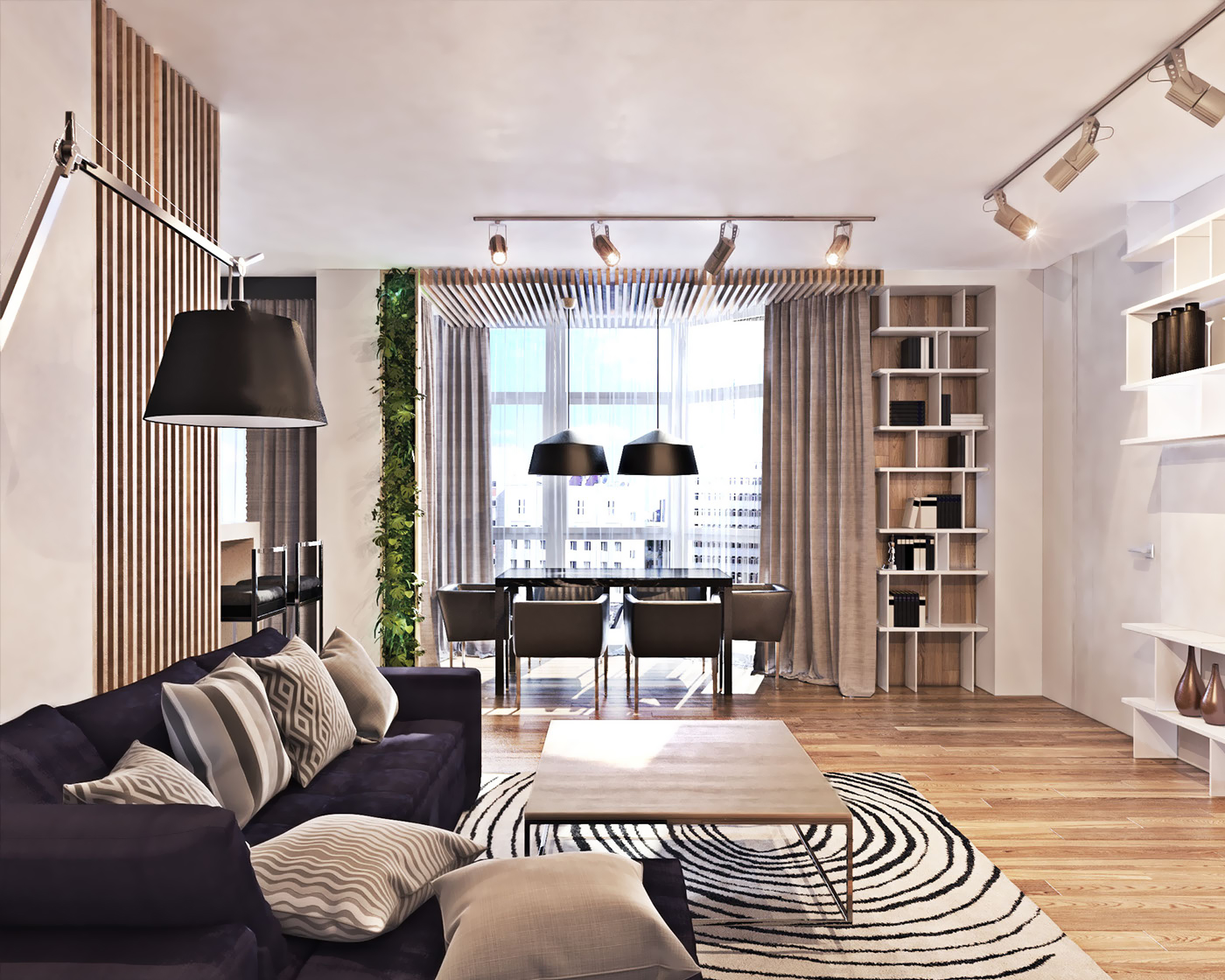
If you are installing recessed fixtures, choose ultra-slim, wafer-thin LED directional units rather than traditional deep canisters, which create dark cones of shadow. Place these lights closer to the walls and angle the beam spread directly at the vertical wall surface. This technique, known as wall washing, illuminates the vertical planes of the room from top to bottom, making the boundary walls appear wider and taller while avoiding glaring overhead hotspots.
Coordinating Bulb Temperatures and Scale
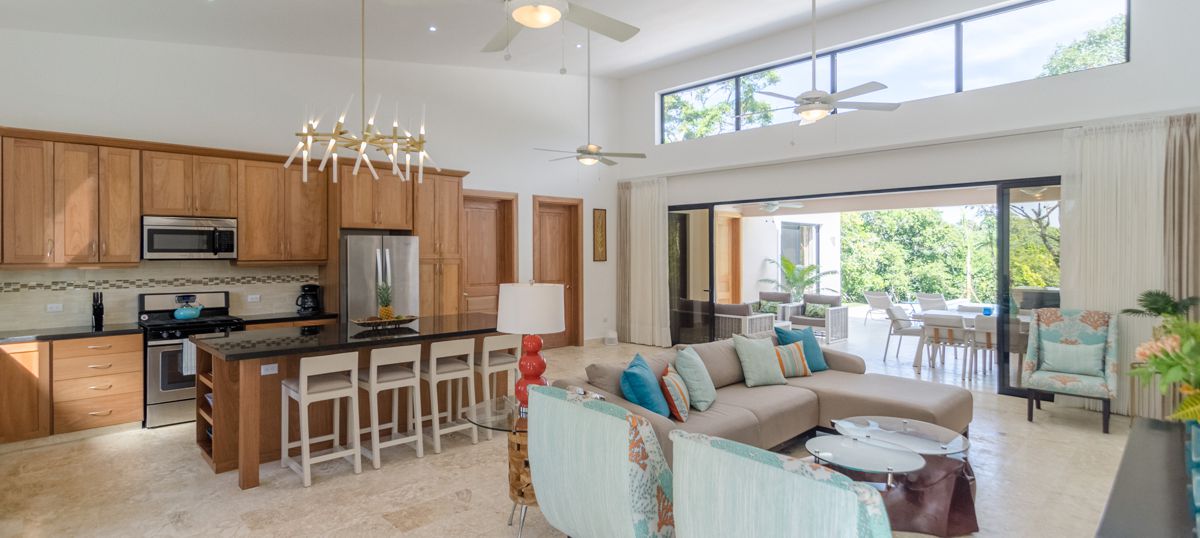
Fixtures that drop too low into physical walking space break up sightlines and remind occupants of the room’s physical clearance. Replace heavy, suspended pendants and bulky chandeliers with low-profile semi-flush mounts or sleek flush architectural disks that sit as close to the drywall as possible.
Equally important is color temperature consistency. Low ceilings illuminated by cool, clinical daylight bulbs (above 4000K) often feel cold and industrial, emphasizing physical constraints. Stick to a warm white spectrum between 2700K and 3000K. This warmth mimics natural evening light, softens harsh edge shadows, and creates an inviting glow that lets the room breathe.
Through thoughtful paint undertones, clever sheen management, and fixtures that cast light upward rather than downward, you can dissolve the rigid boundaries of a low-clearance room. The space transforms from cramped and confining into an airy, balanced environment where the ceiling simply fades into the background.