
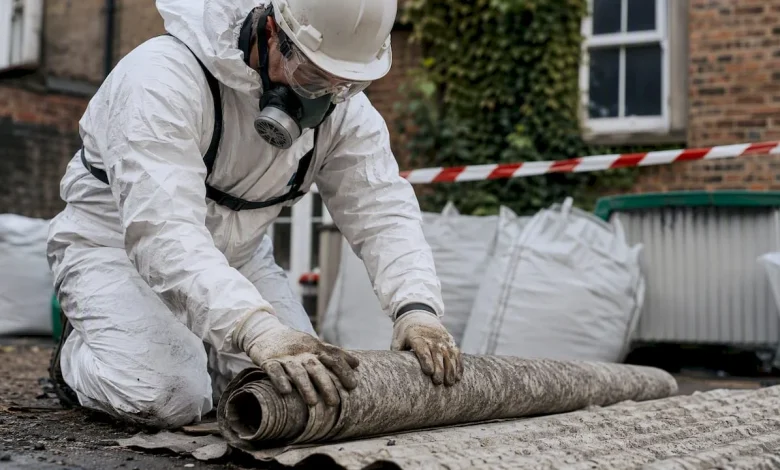
A shed replacement can stall when the old structure turns out to contain asbestos cement sheeting and work stops while everyone works out what happens next. That stall is avoidable. When the inspection, quote, permits and paperwork are done before booking, the removal schedule follows from the actual assessment and the scope agreed with the contractor.
Start with what the shed is actually made of
Sheds built before 1990 were commonly clad in fibro sheeting, which may contain asbestos fibers bound into the cement. The material shows up as flat wall panels, corrugated roof sheets, eaves linings and internal boards. Corrugated roofing sold under names such as Super Six is a frequent find. Asbestos also hides in less obvious spots, including old vinyl floor tiles, pipe lagging, window packing and the backing board behind electrical fittings.
Asbestos cement sheeting is an example of bonded, or non-friable, asbestos. It can release fibers if it is drilled, cut, broken or weathered. Friable asbestos requires a stricter license class, so let a qualified professional identify the material before anyone handles it.
The inspection is the first thing to sort out. Ask each contractor whether the visit includes written identification of every suspect material, and whether sample testing is priced in. Get the identification in writing even if no testing is needed. The demolition method and the license class both depend on that document, and a quote built on a guess tends to grow once work starts.
Know where the legal line sits before you book anything
If the shed predates 1990 and the material is unconfirmed, treat the licensed-contractor route as the default. Match the contractor’s license class to the material the inspection identifies before you book anything.
For a full shed demolition, plan to hire a contractor whose license covers the work. Licenses come in classes, and the class has to match the material found in the inspection. A contractor licensed only for bonded removal cannot take friable material, so the identification document drives this decision. Some regions also require the contractor to notify the regulator before work starts, so ask who lodges that notification and when.
Ask for the license number and confirm it with the issuing body, and request proof of insurance at the same time. A contractor who works to a recognized safety management standard will say so without being prompted. These checks cost nothing and they shorten the list quickly. Keep copies of both documents, because they go into the same project file as the clearance paperwork later.
Read the quote for what it leaves open
A removal quote is a short document, and what it leaves out tends to cost more than the figure at the bottom. Get each of these points in writing before you accept anything.
- Whether the price is fixed, and what counts as a variation. Soil contamination and extra material found behind linings can both add charges later.
- Whether disposal fees are included, and whether a minimum load charge applies. A minimum charge favors the provider on small jobs, because you pay for capacity you never use.
- How long the quote stays valid. A 90-day validity favors you and gives the schedule room; a 30-day validity pressures you to start before the permits land.
- Whether the clearance inspection is included, and who books the independent assessor. This is a cost and a scheduling dependency, so it belongs in the quote.
- The payment schedule. Payment on completion, after the certificate is issued, favors you. A large deposit with the balance due at demolition favors the contractor.
Homeowners comparing bonded asbestos removal quotes can use the Asbestos Removal Sydney service page as a starting point, then put the same written questions to each company. A fixed price that includes disposal and clearance may work out lower than a base figure that leaves both out.
Ask about turnaround as well: how soon the crew can start and when the clearance result arrives. Those dates drive every booking that follows.
Prepare the site before the crew arrives
Once the quote is accepted, the preparation list belongs to you unless the contract says otherwise. Confirm who handles each item, because assumptions here cause the most expensive delays.
Ask the contractor to spell out in writing which preparation tasks sit with you and which sit with the crew. The same conversation should cover how specialist utility work is coordinated, including who arranges the electrician or plumber and what supply the crew needs for their decontamination setup.
If your council requires a permit or notification for demolition, lodge it early. Approval times vary, and the removal date depends on them. Give the neighbors a date as well. A quick note about the schedule and the dust controls prevents complaints that can pause work.
Confirm access a week out. The crew needs room for vehicles and a wrapped waste load. Check gates, driveway width, overhanging branches and the spot where the load will sit. Ask the removalist how to clear access safely. Leave items or plants touching suspected asbestos sheeting undisturbed for the crew to assess.
Know what a controlled dismantling looks like
You won’t supervise the demolition, but you should know what a compliant job looks like. Before the start date, ask the contractor for a plain-language work schedule that sets out each stage and when it happens. Work out the access restrictions too, so you know which parts of the property stay off limits and for how long. Confirm a named contact person you can reach with questions while the work is underway.
Ask the contractor which tools are suitable for the material. Cutting or grinding fibro sheeting fractures the cement and releases fibers, so a professional crew lifts sheets whole wherever the fixings allow. The method statement should also say how the crew handles a broken sheet, because breakage happens even on careful jobs. Direct any questions about the method to the supervisor from outside the work area.
Waste handling shows the same standard. Before the day, ask for the agreed documentation covering how waste is sealed, labeled and removed from the site. The same paperwork should set out the coordination arrangements, including who supervises the work area and how the crew confirms the site is left clean.
All of this runs without you inside the work area. What happens on the day should match what you agreed in the quote, and the exclusion zone around the site is part of the method.
Settle the ground question before the slab
A shed that has stood for decades may have asbestos fragments in the soil around its footprint from old breakage or storm damage. Ask whether the ground around the shed is included in the clearance inspection, particularly if a new slab is planned.
Ask the removal provider, before demolition, how any ground-related findings would change the scope, the cost and the schedule. A qualified provider can explain what a clearance inspection might turn up and how each outcome is handled and priced. Get that conversation in writing so the quote reflects it.
If the quote treats soil work as a variation, ask what evidence triggers it and what the daily rate is. Soil work can add to the final bill, so ask how the cost is managed before signing.
Where the new shed needs a concrete slab, say so at the quote stage. Ask whether soil work and preparation for the slab need separate visits. That helps you price both stages before booking. Ask whether the clearance will cover the soil or only the structure’s footprint, so nothing is ambiguous at slab time.
Collect the paperwork that releases the site
The removal closes out with paperwork, and you should hold all of it before the builders arrive. Ask the contractor which completion records apply to your job and who supplies each one, since the removal work determines who can independently inspect the area and issue the clearance certificate. Confirm the timing too, because some assessors issue it on the day while others send results after laboratory checks.
Settle the failure case in advance. If the assessor finds residue, the removal contractor should return and re-clean at their own cost, with a second inspection to follow. Put that in the quote terms, and ask how long results take, because every booking after the removal depends on the certificate date.
The second document is the disposal record. Asbestos waste moves under a chain of custody. Ask how the waste will be packaged, transported and taken to a facility approved to accept it, and which tracking records apply to the job. Ask for the disposal receipts and file them with the certificate. If you sell the property later, those pages answer the buyer’s first question.
Sequence the project in the right order
A realistic sequence for a standard backyard shed runs in this order.
- Inspection and testing: confirm the assessor’s visit and when results will arrive.
2. Quotes and license checks: approach several companies and confirm each one’s availability.
3. Council permits and utility disconnection: book these in parallel, because they don’t depend on each other.
4. Demolition and removal: confirm the start date with the removalist once permits are in hand.
5. Clearance inspection and certificate: confirm the assessor’s visit and when the certificate will be issued.
6. Ground preparation and slab: book this only after the certificate is issued.
7. New shed delivery and installation: confirm the date with the supplier once the slab is scheduled.
Book the slab pour against the certificate date, and add buffer days for the assessor’s turnaround. Allowing slack between removal and slab can reduce the risk of rebooking. A slab booking delayed by a failed clearance costs rebooking fees across every trade that follows.
Keep the removal contractor’s details until the new shed is up. If groundworks uncover a suspect fragment, stop work, leave it undisturbed and contact the removalist under the terms you agreed at the start. The paperwork holds the project together: the written identification from the inspection and the quote that prices what it found. Start with the inspection, and every other date follows from it.