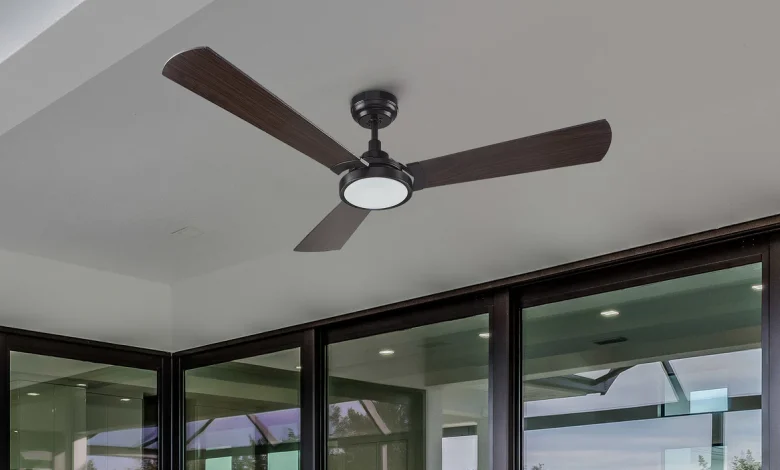
Ceiling fans are one of the most practical additions to any room, yet they’re also one of the most commonly misjudged. The majority of purchasing decisions come down to style and price, while the factor that most directly affects performance — size — gets overlooked until the fan is already installed and underperforming.
Getting the size wrong doesn’t just affect comfort. It affects airflow efficiency, energy consumption, noise levels, and how the fixture looks in the space. Understanding what drives the right sizing decision is more straightforward than most guides suggest.
Why Size Gets Overlooked in the First Place
Most product listings lead with design, finish, and price. Blade span is usually listed somewhere in the specifications, but without context, those numbers don’t mean much to someone who hasn’t thought through room dimensions and ceiling clearance before buying.
The result is a common pattern: buyers choose a fan based on appearance, receive it, install it, and then notice that the airflow is weak, the fan looks disproportionate, or the blades are uncomfortably close to walls or furniture. Correcting the mistake at that stage means returning the product, reinstalling a different unit, and dealing with effort that could have been avoided with a clearer understanding of how sizing actually works.
The Core Relationship Between Room Size and Blade Span
Blade span — the diameter of the circle the blades make while spinning — is the primary sizing variable. It determines how much air the fan can move across a given area. A general reference point that works across most spaces:
- rooms up to 75 sq ft — fans with a blade span of 29 to 36 inches
- rooms between 76 and 144 sq ft — 36 to 42 inches
- rooms between 145 and 225 sq ft — 44 to 50 inches
- rooms between 226 and 400 sq ft — 50 to 54 inches
- larger open-plan spaces — 56 inches or above, sometimes with multiple units
These aren’t rigid rules, but they reflect the practical relationship between fan diameter and the airflow coverage needed to actually feel a difference in the room.
Ceiling Height Changes the Calculation
Room dimensions alone don’t tell the full story. Ceiling height affects both airflow performance and blade clearance, which introduces a second variable that’s easy to miss.
For standard ceilings — typically around 8 to 9 feet — a flush mount or low-profile fan keeps the blades at a functional height without creating clearance issues. For higher ceilings, a downrod is needed to bring the fan to the right operating height, which is generally 7 to 9 feet above the floor.
Mounting a fan too high reduces its effectiveness significantly. The air it moves dissipates before reaching occupant level, which defeats the purpose of running the fan at all.
Where Smart Ceiling Fans Change the Dynamic
Beyond size, the way a fan is controlled has become a growing consideration. A smart ceiling fan offers scheduling, speed adjustment, and in many cases integration with home systems — all without requiring manual adjustment from a wall switch or pull chain. For larger rooms or spaces used across different times of day, this level of control allows the fan to work more efficiently. Running at a lower speed during cooler periods or adjusting automatically based on usage patterns reduces energy consumption without any added effort from the user.
Common Sizing Mistakes and Why They Happen
Choosing a fan that’s too small for the space
This is the most frequent mistake. A small fan in a large room has to run at high speed to compensate, which increases noise and energy use without ever fully covering the space. Many buyers underestimate room dimensions or default to mid-size fans as a safe choice.
Choosing a fan that’s too large for the space
Oversized fans in smaller rooms create excessive airflow, which can feel uncomfortable rather than refreshing. They also tend to look out of proportion, which affects how the room reads visually.
Ignoring blade clearance from walls
Blades need at least 18 inches of clearance from surrounding walls or obstructions. In rooms with unusual layouts, this can significantly limit which sizes are actually viable.
Assuming one fan is always enough
Long or open-plan spaces sometimes need two fans positioned to work together rather than one large unit trying to cover too much area. This is particularly relevant in extended living areas, covered outdoor spaces, or multi-zone rooms.
How Room Purpose Affects the Decision
Different rooms place different demands on a ceiling fan, which can influence both size selection and feature priorities.
- living rooms benefit from wider coverage and adjustable speed settings for different occupancy levels
- bedrooms generally favor quieter motors and lower-speed options to avoid disruption during sleep
- kitchens require fans positioned to avoid interference with cabinetry, with moisture-resistant finishes in some cases
- outdoor spaces and covered patios need fans rated for damp or wet environments depending on exposure level
Matching the fan’s specifications to how the room is actually used leads to better long-term results than simply selecting based on blade span alone.
Exploring Ceiling Fan Options Before Committing
One of the more practical steps before making a final decision is reviewing a range of formats side by side. Looking through available ceiling fans can help clarify differences in blade span, motor type, mounting style, and control options — making it easier to match a specific fan to a room’s actual requirements rather than relying on guesswork.
Getting the Size Right Is the Foundation
Every other decision — finish, motor quality, smart features, lighting integration — matters less if the blade span is wrong for the space. A well-designed fan that’s undersized for the room will always underperform, while the right size paired with even basic features can noticeably improve comfort.
Taking the time to measure the room, account for ceiling height, check blade clearance, and think through how the room is used on a daily basis covers most of what’s needed to make a confident, well-matched choice. From there, the remaining decisions become considerably easier to navigate.