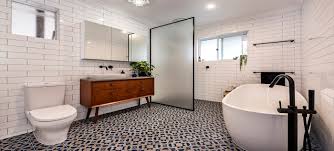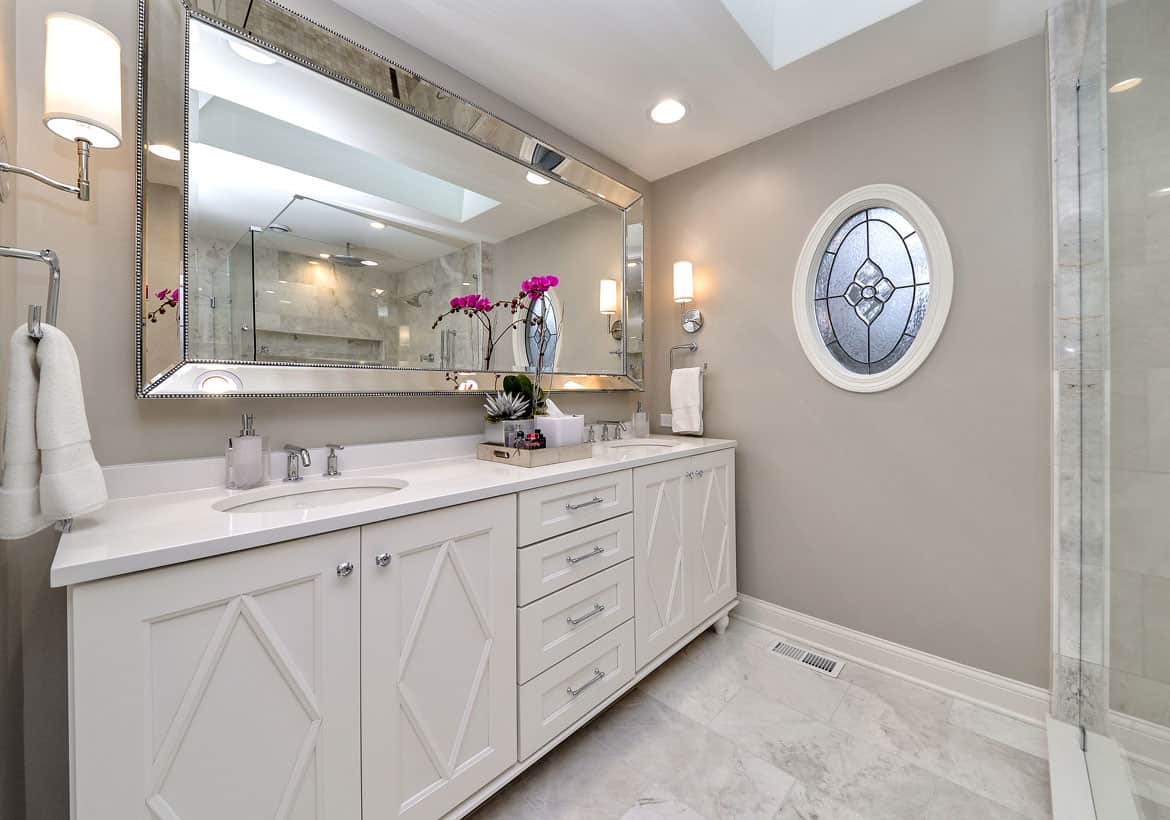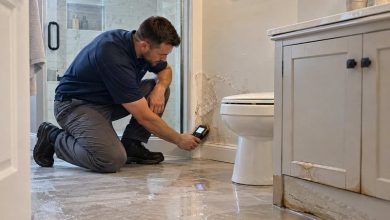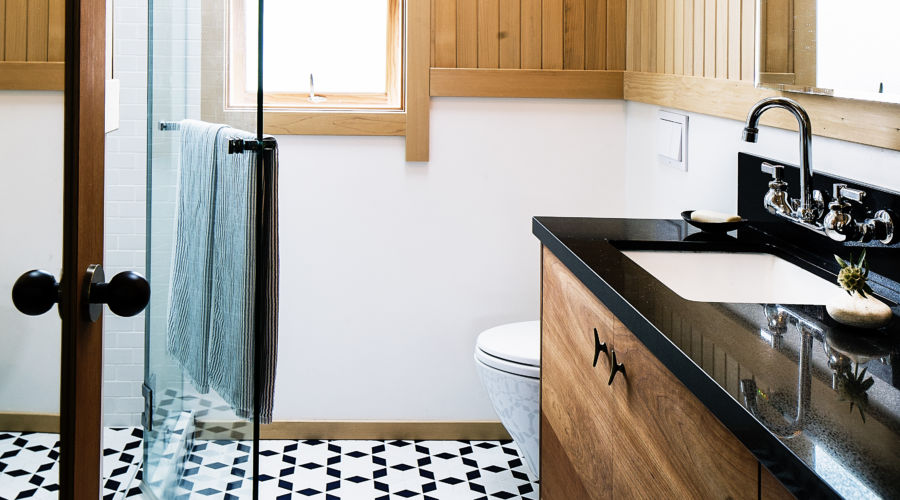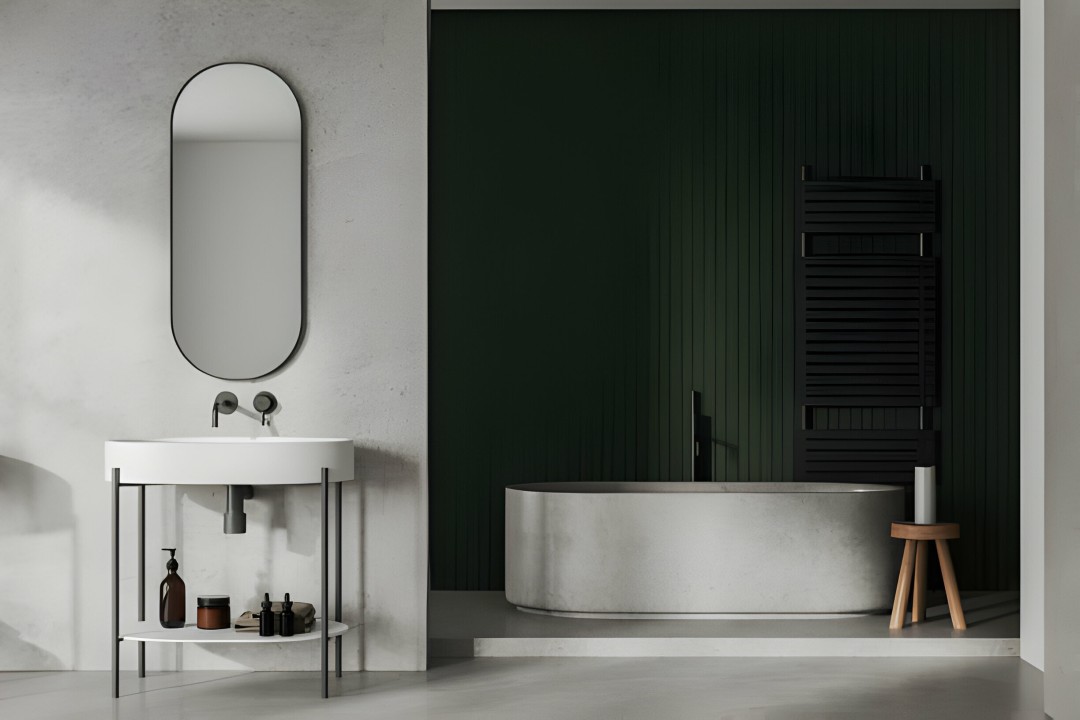
When homeowners plan a bathroom remodel, their attention almost always drifts toward the tactile and visible elements: hand-glazed zellige tile, brushed brass plumbing trim, floating white oak vanities, and frameless glass enclosures. These finishes define the room’s aesthetic, but they do nothing to ensure its longevity. The true craftsmanship of a bathroom renovation lies entirely in what vanishes before the first tile is set.
Waterproofing is not an optional upgrade or an isolated step in the remodeling sequence. It is the structural insurance policy that keeps thousands of dollars in decorative tile and custom cabinetry from rotting from the inside out. Understanding how moisture behaves behind finished surfaces is the difference between a remodel that endures for thirty years and one that fails in three.
The Dangerous Myth of “Waterproof” Tile
One of the most persistent misconceptions in residential remodeling is that ceramic, porcelain, or stone tile provides an impermeable shield against moisture. It does not. Tile and grout are decorative cladding designed to shed bulk water toward a drain, not to serve as an airtight water barrier.
Grout is inherently porous. Cement-based grouts absorb moisture like a sponge, allowing water to wick through hair-thin curing cracks and micro-fissures caused by normal structural settling. Even glazed porcelain tiles feature minute perimeter absorption zones, while unsealed natural stone allows water to seep directly through its crystalline matrix. Thin-set mortar beneath the tile is equally porous.
When water inevitably bypasses the tile layer, it seeks an exit. Without a continuous, sealed membrane directly underneath, that moisture saturates the wall cavity, attacks the framing lumber, rots plywood subfloors, and fosters insidious mold colonies. By the time a homeowner notices a musty odor or a sponginess in the floorboards outside the shower curb, structural framing members may already have suffered extensive dry rot.
The Evolution of Behind-the-Wall Waterproofing
Decades ago, standard residential building practice relied on basic moisture-resistant drywall, commonly known as greenboard, nailed directly to wall studs in wet areas. In shower pans, builders installed loose PVC or chlorinated polyethylene liners over flat subfloors, frequently puncturing them with staples below the flood line.
These legacy methods relied on water draining slowly through a thick bed of wet mortar beneath the tiles, a system known as a water-in, water-out assembly. While code-compliant in many jurisdictions for years, these assemblies frequently trap standing water inside the mortar bed, causing persistent microbial growth, efflorescence along grout joints, and rotten curbs.
Modern building science has shifted almost entirely to bonded waterproof assemblies, where the moisture barrier sits directly beneath the tile rather than deep under the mortar bed. These modern systems fall into two primary categories.
Sheet Membranes vs. Liquid-Applied Barriers
Sheet membranes are pre-formed polyethylene films laminated with anchoring fleece on both sides. Installers bed the membrane into wet thin-set mortar against approved wall substrates, overlapping and sealing seams with waterproof banding. Sheet membranes deliver a verified, uniform mil-thickness across every square inch of the enclosure, effectively eliminating the risk of thin spots caused by installer error. They also act as exceptional vapor retarders in steam showers.
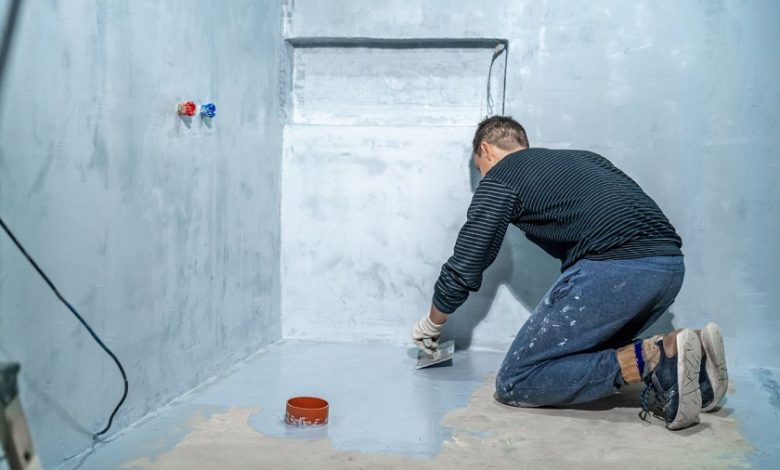
Liquid-applied membranes, by contrast, are elastomeric coatings rolled or brushed onto cement backer units like heavy paint. They cure into a seamless, rubberized skin that contours smoothly over complex geometries, including built-in benches, shower seats, and recessed shampoo niches. However, liquid membranes require strict quality control: they must be applied to a specific dry-film thickness across several coats. If applied too thinly, pinholes develop; if applied too thickly in corners, the material can split as it cures.
Integrated Waterproof Foam Panels
The latest standard in high-end tile installation replaces traditional cement boards with extruded polystyrene foam panels that feature factory-bonded waterproof coatings. These panels are rigid, lightweight, and completely impervious to water throughout their core. Because the board itself is the waterproofing layer, installers only need to seal fastener penetrations and board seams with specialized joint sealant. This dramatically cuts down installation time while eliminating the risk of water ever reaching the wood studs.
Critical Vulnerability Zones in the Wet Area
Water possesses remarkable surface tension and capillary action, allowing it to migrate sideways and even upward against gravity. A waterproofing failure rarely occurs in the center of an open wall; it almost always strikes at transitions, penetrations, and corners.
-
Shower Curbs: The threshold where the shower pan meets the main bathroom floor represents the single most common failure point in residential showers. Wood framing beneath the curb expands when exposed to even minor moisture intrusion, cracking the curb tile and breaking the pan seal. Solid, waterproof foam curbs or poured-concrete curb cores eliminate this seasonal movement.
-
Recessed Niches: A shampoo niche introduces four inside corners, four outside corners, and a horizontal shelf directly into the path of falling water. The bottom sill of every niche must be pitched slightly forward toward the shower floor so water drains naturally rather than pooling against the back wall.
-
Valve and Pipe Penetrations: The rough-in openings around the shower mixing valve, hand-shower elbows, and showerheads must be sealed with dedicated elastomeric pipe seals or hybrid polyurethane sealants. Leaving these openings open behind a decorative escutcheon plate invites steam and bouncing spray directly into the wall cavity.
-
The Pan Pre-Slope: In traditional mortar-bed showers, the liner must sit on a pre-sloped mortar base, not directly on a flat subfloor. A flat pan liner creates a permanent stagnant reservoir of dirty shower water beneath the tile, degrading the mortar bed and rusting out drain assemblies.
The True Cost of Cutting Corners
Skipping comprehensive waterproofing or hiring an inexperienced installer to cut labor costs is one of the most expensive gambles a homeowner can make. Remediating a failed shower enclosure is far more costly than doing it properly during the initial build.
Because waterproofing is buried beneath the tile, a leak cannot be patched locally. Fixing a failed pan liner or a compromised corner almost always requires demolishing the entire shower enclosure down to the bare framing studs. Custom glass enclosures must be dismantled, designer tile chipped out and discarded, and expensive plumbing trim removed.
Furthermore, standard homeowner insurance policies routinely deny claims related to continuous or repeated seepage, categorizing gradual rot and mold as preventable maintenance failures rather than sudden accidental losses. Homeowners often find themselves paying out-of-pocket for structural framing repairs, subfloor replacement, professional mold remediation, and a complete second renovation.
Safeguarding Your Investment
To protect your home and budget, insist on clear quality-control benchmarks before the first tile arrives on site.
First, request a unified installation system. Using backer board from one manufacturer, waterproofing liquid from another, and thin-set mortar from a third often voids manufacturer warranties. High-performance waterproofing manufacturers offer comprehensive, decade-long replacement warranties only when their entire ecosystem of products is installed according to specification.
Second, make a twenty-four-hour flood test a mandatory requirement in your construction contract. Before tiling begins, the shower drain should be plugged with an expanding mechanical test plug, and the pan filled with water up to the top of the curb. Leaving the water standing for a full day verifies that the pan liner, curb corners, and drain flange connection are completely watertight before they are permanently sealed beneath mortar and tile.
A bathroom renovation should bring daily comfort and lasting equity to your home. By prioritizing the invisible engineering of proper waterproofing over cosmetic shortcuts, you ensure that your investment remains as sound beneath the surface as it looks on top.